St Patrick's Catholic Primary School

RE
Curriculum Intent
Why do we teach Religious Education?
At St Patrick's Catholic Primary School, Religious Education is at the heart of everything we do. As a Catholic school, our faith shapes every aspect of school life, enabling every child to grow spiritually, morally, academically and socially.
Guided by our mission to strive to be the best we can be for the Glory of God, we celebrate the uniqueness of every child and nurture their God-given talents. Through Religious Education, prayer, liturgy and the daily life of the school, we help children develop a deep and meaningful relationship with God while inspiring them to love, respect and serve others.
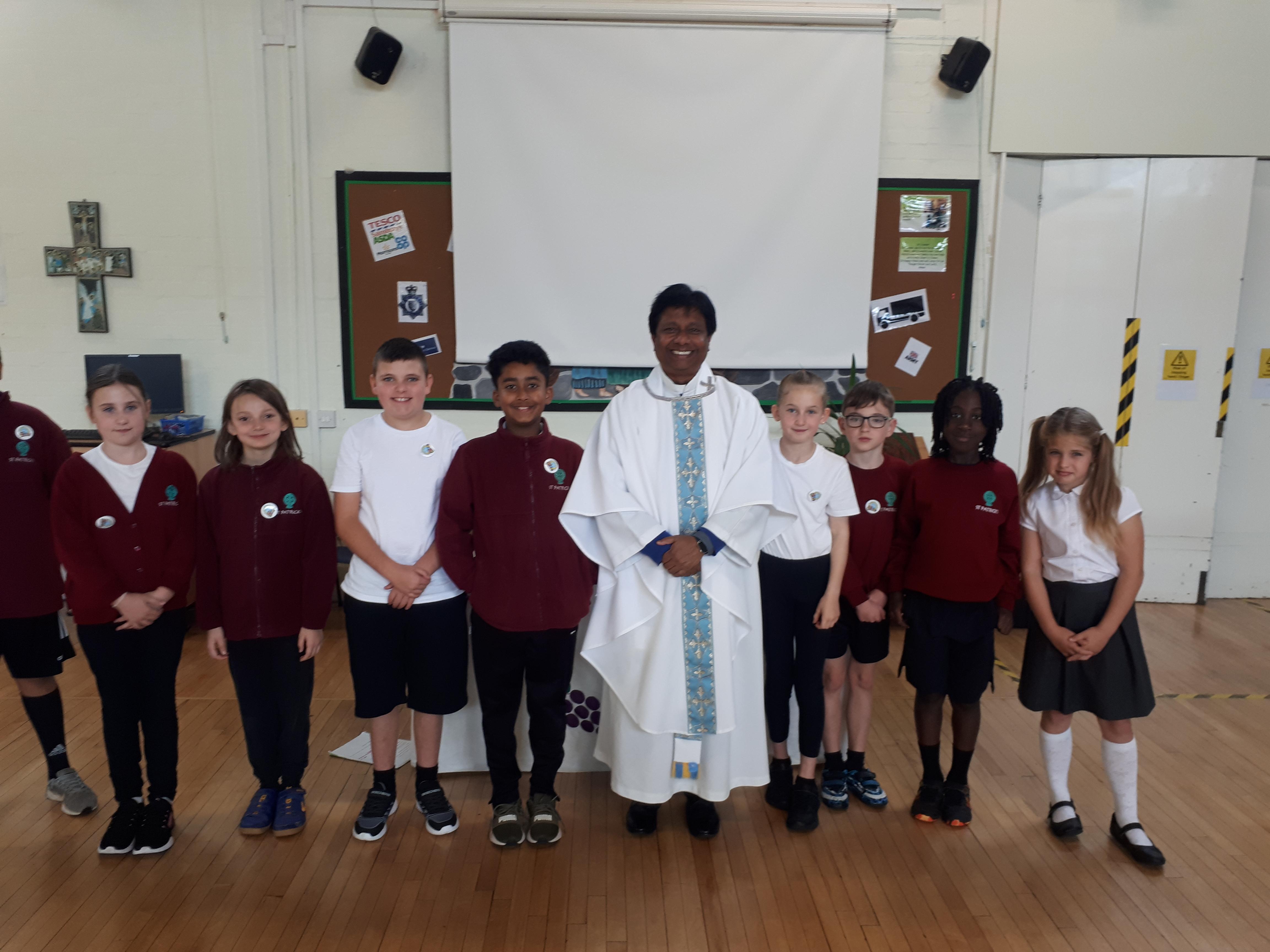
Religious Education is far more than a curriculum subject. It is a living expression of our Catholic faith that permeates our curriculum, relationships and community life. Working closely with our parish community, Fr Ravi and our partner schools, we support every child on their individual journey of faith and discipleship.
Our Aims
At St Patrick's, Religious Education enables children to:
- Develop a secure knowledge and understanding of the Catholic faith.
- Deepen their understanding of Scripture, theology and Church teaching.
- Reflect upon moral, ethical and social issues through the lens of Catholic teaching.
- Recognise the relationship between faith and everyday life.
- Respect and appreciate people from different faiths, cultures and backgrounds.
- Explore questions of meaning, purpose, identity and vocation.
- Make meaningful connections between Religious Education and other areas of learning.
- Understand the relationship between faith, life and culture.
- Become active disciples who seek to live out Gospel values each day.
Catholic Social Teaching
Catholic Social Teaching is woven throughout the life of our school and curriculum.
Through age-appropriate study, prayer, reflection and social action, children learn how Gospel values can be lived out in service to others. Key themes include:
- Human Dignity
- The Common Good
- Solidarity and Peace
- Care for Creation
- Participation
- Preferential Option for the Poor
- Rights and Responsibilities
These principles are explored through Religious Education lessons, prayer and liturgy, charitable initiatives, pupil leadership opportunities and wider curriculum experiences. As a result, pupils develop compassion, justice, responsibility and a desire to make a positive difference in the world.
Curriculum Implementation
How is Religious Education taught?
Our Religious Education curriculum is shaped by our Catholic mission and the Religious Education Directory.
A minimum of 10% of curriculum time is dedicated to Religious Education across all key stages, reflecting its importance as a core subject within our Catholic school.
We follow The Vine and The Branches, the programme recommended by the Diocese and designed to fulfil the requirements of the Religious Education Directory. This ambitious and carefully sequenced curriculum ensures clear progression in pupils' knowledge and understanding of Scripture, Catholic teaching, prayer, liturgy and tradition.
Vocabulary is explicitly taught and revisited throughout each unit to ensure pupils develop a secure understanding of key theological concepts and can confidently articulate their beliefs and understanding using appropriate religious language. Retrieval practice is embedded throughout lessons, enabling pupils to revisit prior learning, make connections and deepen understanding over time so that they know more and remember more.
Strong assessment practices are integral to Religious Education. Teachers use questioning, retrieval activities, discussion, reflection, written outcomes and pupil voice to assess understanding, identify misconceptions and inform future teaching. Adaptive teaching ensures that all pupils, including those with SEND, disadvantaged pupils and pupils with English as an Additional Language, can access the same ambitious curriculum and achieve success.
Learning is enriched through:
- Prayer and Liturgy
- Drama
- Art
- Music
- History
- Geography
- Computing
- Reflection and Discussion
We recognise that parents are the first educators of their children in faith and actively work in partnership with families to support every child's spiritual and moral development.
Living Our Faith
Creating a Catholic Environment
We foster a caring, inclusive and welcoming community where every individual is recognised as a child of God. Staff model Gospel values through their words, actions and relationships, helping children understand how faith shapes daily life.
Prayer, Worship and Liturgy
Working closely with Fr Ravi and our parish community, children participate in a rich programme of prayer and worship including:
- School Masses
- Class Liturgies
- Celebration of the Word
- Prayer Services
- Liturgical Assemblies
- Feast Day Celebrations
These opportunities nurture children's relationship with God and strengthen their understanding of Catholic traditions, prayer and worship.
The Vine and The Branches
The curriculum is organised around six branches which are revisited throughout each year group:
- Creation and Covenant
- Prophecy and Promise
- Galilee to Jerusalem
- Desert to Garden
- Ends of the Earth
- Dialogue and Encounter
Within each branch, pupils deepen their understanding through four lenses:
- Hear
- Believe
- Celebrate
- Live
Learning is further developed through three ways of knowing:
- Understand
- Discern
- Respond
Together, these elements encourage children to engage deeply with Scripture, Catholic teaching and their growing faith.
Curriculum Impact
What difference does our Religious Education curriculum make?
By the time children leave St Patrick's Catholic Primary School, they will:
- Have a secure and developing understanding of the Catholic faith.
- Confidently articulate their beliefs and understanding using appropriate religious vocabulary.
- Demonstrate a growing ability to understand, discern and respond to questions of faith and life.
- Live out Gospel values including love, peace, honesty, courage, forgiveness and justice.
- Develop meaningful and personal relationships with God through prayer and worship.
- Recognise and celebrate their God-given talents.
- Demonstrate respect, empathy and compassion towards others.
- Understand their place within the Church and the wider global community.
- Show a commitment to serving others and caring for God's creation.
- Achieve well and make strong progress in Religious Education.
- Produce work of a high standard and take pride in their learning.
- Be ambassadors for Christ through their words, actions and relationships.
Assessment information, pupil voice, monitoring activities, work scrutiny and moderation demonstrate strong progress and increasing depth of understanding across the curriculum. Children can confidently make links between Scripture, Catholic teaching and their everyday lives, demonstrating how faith influences the choices they make and the way they treat others.
As Our Children Move On
We hope every pupil leaves St Patrick's with:
- A commitment to ongoing spiritual growth.
- Integrity and honesty in their relationships with others.
- Resilience and perseverance when facing challenges.
- Curiosity, reflection and a love of learning.
- Confidence to work independently and collaboratively.
- High aspirations for their future.
- A lifelong desire to serve others through faith, compassion and justice.
Through Religious Education, prayer, worship and Catholic Social Teaching, we inspire every child to grow in faith, flourish in life and fulfil their God-given potential, always striving to be the very best they can be for the Glory of God.
You will be able reference the policies via the link below:
An example of a front page from the scheme The Vine and The Brachces