
St Patrick's Catholic Primary School

PE
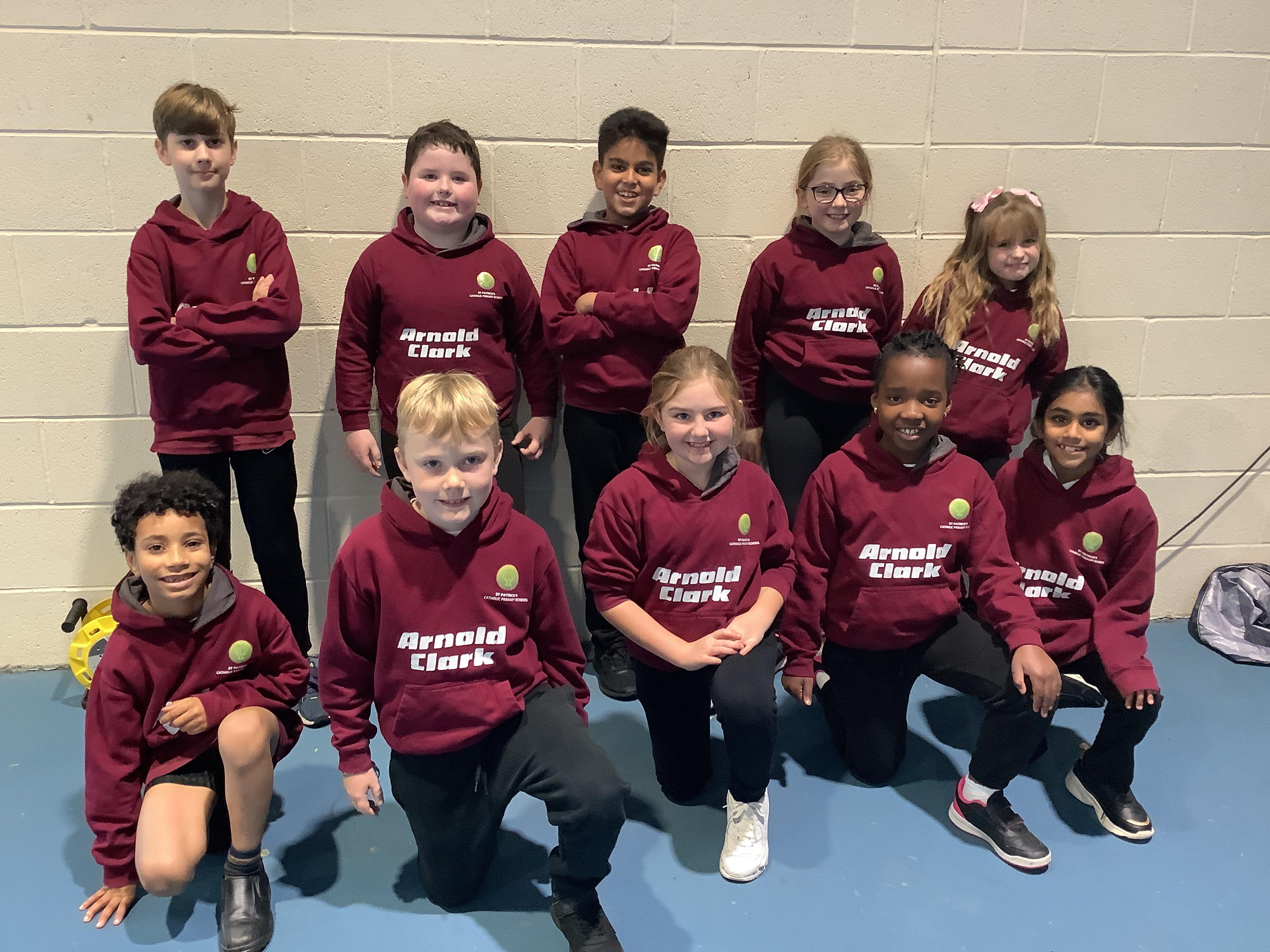
Year 3/4 Kwik Cricket Competition
A high-quality physical education curriculum inspires all pupils to succeed and excel in
competitive sport and other physically-demanding activities. It should provide opportunities
for pupils to become physically confident in a way which supports their health and fitness.
Opportunities to compete in sport and other activities build character and help to embed
values such as fairness and respect.
National Curriculum 2014
Curriculum Intent
At St Patrick’s Catholic Primary School, our Physical Education curriculum is ambitious, inclusive and designed to inspire all pupils to lead healthy, active lives. Through a broad and balanced programme of physical activity, pupils develop confidence, resilience, teamwork and a lifelong appreciation of physical activity and sport.
Our PE curriculum aims to ensure that all pupils:
- Develop competence and confidence across a broad range of physical activities.
- Are physically active for sustained periods of time.
- Participate in competitive sports and physical activities.
- Develop resilience, determination and sportsmanship.
- Improve their physical literacy, fitness and wellbeing.
- Understand the importance of physical activity in leading healthy, active lives.
- Develop teamwork, leadership and communication skills through a range of sporting experiences.
- Build confidence through individual achievement and collaborative participation.
Through high expectations, carefully sequenced learning and regular opportunities to apply skills in competitive and non-competitive contexts, pupils develop both physical competence and a positive attitude towards physical activity.
Curriculum Implementation
Our teaching and implementation of Physical Education is based on the National Curriculum and is supported by Crossbar Coaching, who work alongside school staff to deliver high-quality PE lessons and provide valuable professional development opportunities.
Detailed long-term and medium-term planning ensures that pupils develop progressively across all areas of physical education. Learning is carefully sequenced so that pupils revisit and build upon previously taught skills, enabling them to know more, remember more and achieve greater success over time.
Strong assessment practices are embedded throughout PE. Teachers and coaches use ongoing formative assessment to identify strengths, misconceptions and next steps. Adaptive teaching ensures that all pupils, including those with SEND, disadvantaged pupils and less confident participants, can access and succeed within an ambitious PE curriculum.
The curriculum develops pupils' knowledge, skills and understanding across:
- Invasion Games
- Striking and Fielding Games
- Athletics
- Dance
- Gymnastics
- Outdoor and Adventurous Activities
- Health and Fitness
Throughout lessons, pupils are encouraged to:
- Develop physical competence.
- Apply skills in increasingly competitive situations.
- Reflect upon and evaluate performance.
- Demonstrate teamwork and leadership.
- Improve personal performance and achieve personal bests.
Regular opportunities for retrieval and application ensure that previously taught skills are revisited and refined throughout the year.
EYFS
Physical development is a key area of learning within the Early Years Foundation Stage. Children develop gross and fine motor skills through continuous provision, structured activities and a weekly PE lesson.
Gross Motor Skills
Children learn to:
- Negotiate space and obstacles safely with consideration for themselves and others.
- Demonstrate strength, balance and coordination.
- Move confidently through running, jumping, hopping, skipping, climbing and dancing.
Fine Motor Skills
Children learn to:
- Develop an effective pencil grip.
- Use a range of small tools confidently.
- Demonstrate increasing accuracy and control when drawing and creating.
Through carefully planned opportunities both indoors and outdoors, children develop the physical foundations required for future learning and participation in sport.
Key Stage 1
The focus in Key Stage 1 is on developing fundamental movement skills and applying them across a range of physical activities.
Invasion Games
Pupils:
- Master basic movements including running, throwing and catching.
- Apply skills in a range of games and activities.
- Develop simple tactics for attacking and defending.
- Learn to work effectively as part of a team.
Striking and Fielding
Pupils:
- Develop throwing and catching skills.
- Learn basic striking and fielding techniques.
- Apply skills within modified games.
Dance, Gymnastics and Athletics
Pupils:
- Develop balance, agility and coordination.
- Improve control and body awareness.
- Explore movement creatively through dance and gymnastics.
- Build fundamental running and jumping skills.
Key Stage 2
In Key Stage 2, pupils refine and apply their skills across a broader range of activities and competitive sports.
Invasion Games
Pupils participate in sports such as:
- Basketball.
- Football.
- Hockey.
- Netball.
- Tag Rugby.
They learn to:
- Apply attacking and defending principles.
- Develop tactical awareness.
- Evaluate and improve performance.
- Work effectively within teams.
Striking and Fielding
Pupils participate in activities including:
- Cricket.
- Rounders.
- Tennis.
- Badminton.
They learn to:
- Use throwing and catching effectively.
- Apply striking and fielding techniques.
- Develop tactical understanding within competitive situations.
Dance, Gymnastics and Athletics
Pupils develop:
- Strength.
- Flexibility.
- Coordination.
- Balance.
- Technique.
They are encouraged to:
- Compare performances.
- Set personal goals.
- Demonstrate continuous improvement.
- Achieve their personal best.
Competitive Sport and Enrichment
Competitive sport is an important part of physical education at St Patrick’s.
Opportunities include:
- Sports Day.
- Intra-school competitions.
- Inter-school competitions.
- Telford and Wrekin School Sports Partnership events.
- Sporting festivals.
- Leadership opportunities.
These experiences help pupils develop confidence, resilience, teamwork and a positive attitude towards competition.
The school has achieved School Games Gold Mark status, reflecting the strength of its commitment to sport, participation and physical activity.
Curriculum Impact
The impact of our Physical Education curriculum is demonstrated through pupils who are physically confident, resilient and motivated to participate in sport and physical activity.
Through carefully sequenced learning, effective assessment and regular opportunities for practice and competition, pupils develop secure physical skills and increasingly confident participation across a range of activities.
Pupils can:
- Demonstrate competence across a broad range of physical activities.
- Apply skills successfully within competitive situations.
- Work collaboratively as part of a team.
- Lead and support others positively.
- Evaluate and improve their own performance.
- Show resilience, determination and sportsmanship.
- Understand the importance of healthy, active lifestyles.
Throughout each unit, teachers and coaches assess learning through:
- Observation of performance.
- Teacher assessment.
- Pupil self-assessment.
- Peer assessment.
- Personal best challenges.
- Team performance reviews.
- Learning discussions.
The wider impact of the curriculum is measured through:
- Pupil voice interviews.
- Learning walks.
- Lesson observations.
- PowerPoint Floor book evidence
- Staff meetings and professional dialogue.
- Participation rates in clubs and competitions.
- Annual reports to parents.
- Subject leader monitoring and evaluation.
As a result, pupils leave St Patrick’s as confident, active and motivated individuals who understand the value of physical activity, enjoy participating in sport and possess the knowledge, skills and attitudes needed to lead healthy, active lives.
Curriculum impact
The impact of our Physical Education curriculum is demonstrated through pupils who are physically confident, resilient and motivated to participate in sport and physical activity.
Through carefully sequenced learning, effective assessment and regular opportunities for practice and competition, pupils develop secure physical skills and increasingly confident participation across a range of activities.
Pupils can:
- Demonstrate competence across a broad range of physical activities.
- Apply skills successfully within competitive situations.
- Work collaboratively as part of a team.
- Lead and support others positively.
- Evaluate and improve their own performance.
- Show resilience, determination and sportsmanship.
- Understand the importance of healthy, active lifestyles.
Throughout each unit, teachers and coaches assess learning through:
- Observation of performance.
- Teacher assessment.
- Pupil self-assessment.
- Peer assessment.
- Personal best challenges.
- Team performance reviews.
- Learning discussions.
The wider impact of the curriculum is measured through:
- Pupil voice interviews.
- Learning walks.
- Lesson observations.
- PowerPoint Floor book evidence
- Staff meetings and professional dialogue.
- Participation rates in clubs and competitions.
- Annual reports to parents.
- Subject leader monitoring and evaluation.
As a result, pupils leave St Patrick’s as confident, active and motivated individuals who understand the value of physical activity, enjoy participating in sport and possess the knowledge, skills and attitudes needed to lead healthy, active lives.