St Patrick's Catholic Primary School
Design and Technology
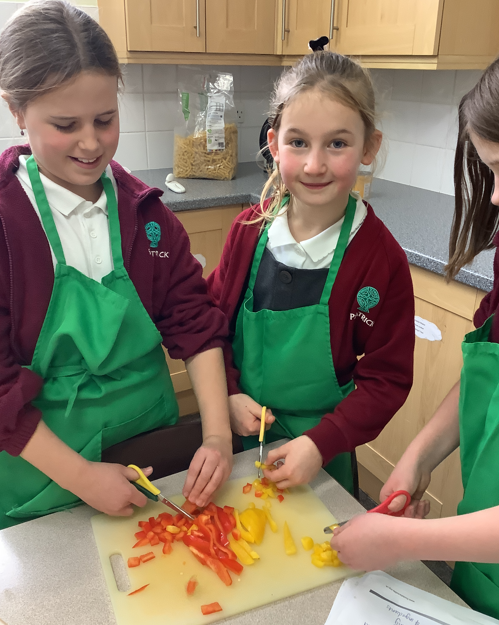
Design and technology is an inspiring, rigorous and practical subject. Using creativity and imagination, pupils design and make products that solve real and relevant problems within a variety of contexts, considering their own and others’ needs, wants and values. They acquire a broad range of subject knowledge and draw on disciplines such as mathematics, science, engineering, computing and art. Pupils learn how to take risks, becoming resourceful, innovative, enterprising and capable citizens. Through the evaluation of past and present design and technology, they develop a critical understanding of its impact on daily life and the wider world. High-quality design and technology education makes an essential contribution to the creativity, culture, wealth and well-being of the nation.
National Curriculum 2014
Curriculum Intent
At St Patrick’s Catholic Primary School, our Design and Technology curriculum is ambitious, creative and carefully sequenced to equip pupils with the knowledge, skills and confidence needed to solve real-life problems and participate successfully in an increasingly technological world. Our curriculum aims to ensure that all pupils:
- Develop the creative, technical and practical expertise needed to perform everyday tasks confidently and participate successfully in an increasingly technological world.
- Build and apply a repertoire of knowledge, understanding and skills to design and make high-quality prototypes and products for a wide range of users.
- Critique, evaluate and test their ideas, products and the work of others.
- Understand and apply the principles of nutrition and develop essential cooking skills.
Through purposeful design opportunities, practical experiences and real-world contexts, pupils develop resilience, creativity and independence. Our curriculum draws upon knowledge from mathematics, science, engineering, computing and art, ensuring pupils appreciate the relevance and application of Design and Technology in everyday life. High expectations underpin all learning, enabling every pupil to achieve success and develop as innovative thinkers and problem-solvers.
Curriculum Implementation
Our teaching and implementation of the Design and Technology curriculum is based on the National Curriculum and is supported by carefully planned long-term and medium-term plans that ensure progression of knowledge and skills from EYFS to Year 6.
The curriculum is designed to provide ambitious and engaging learning experiences that enable pupils to design, make, evaluate and improve products for a range of purposes and audiences. Many units incorporate links to STEM learning, allowing pupils to draw upon knowledge from mathematics, science, engineering, computing and art to deepen understanding and make meaningful connections across the curriculum.
Vocabulary is explicitly taught and revisited throughout each unit to develop pupils' understanding of key technical terminology. Learning is sequenced carefully so that pupils build upon prior knowledge and skills through retrieval practice, regular revisiting of concepts and opportunities to apply learning in new contexts. Assessment is used effectively throughout lessons to identify misconceptions, adapt teaching and provide appropriate challenge and support for all learners. Adaptive teaching strategies ensure that pupils with SEND, disadvantaged pupils and those with additional needs can access the same ambitious curriculum and achieve highly.
Lessons are taught in blocks across each term and follow the design process of investigating, designing, making and evaluating. Children are encouraged to ask questions, explore existing products, consider the needs of users and reflect critically on their own work. Practical experiences provide opportunities for pupils to work both independently and collaboratively, developing creativity, resilience and technical knowledge.
EYFS
Creating with Materials
- Safely use and explore a variety of materials, tools and techniques, experimenting with colour, design, texture, form and function.
- Share their creations, explaining the process they have used.
- Make use of props and materials when role-playing characters in narratives and stories.
Key Stage 1
Year 1
- Design and create a moving vehicle.
- Make a home for the Three Little Pigs.
- Create fruit and vegetable kebabs.
Year 2
- Sewing and weaving.
- Sliders and levers.
- Creating scrummy scones.
Key Stage 2
Year 3
- Designing trousers for Ugg.
- How Fast Should Your Buggy Be?
- Creating Great Green Soup.
Year 4
- What Music Would You Like to Make?
- Creating Pleasing Pasta.
- What Sort of Light Will Work for You?
Year 5
- Batik cushions inspired by the Bayeux Tapestry.
- Bridges in a Modern World.
- Perfect Plant Salad.
Year 6
- How Will You Store Your Favourite Things?
- Budgeting for a Party.
- Picturesque Pizzas.
Curriculum Impact
Through our Design and Technology curriculum, pupils develop the knowledge, skills and creativity required to become confident designers, makers and evaluators. Strong assessment practices and retrieval opportunities ensure that pupils know and remember more over time, enabling them to apply prior learning successfully to new challenges and contexts.
Pupils demonstrate increasing confidence in designing, making, evaluating and refining products. They can discuss their learning using technical vocabulary, explain the design process and reflect thoughtfully on their successes and areas for improvement. Children develop resilience, problem-solving skills and the ability to work collaboratively while maintaining high expectations for the quality of their work.
Throughout each unit, teachers assess learning through questioning, observation, verbal feedback, pupil discussions and evaluation activities. Opportunities are provided for pupils to improve and refine their products, ensuring skills and understanding are continually developed.
Evidence of learning is collected through:
- Design books and project evidence.
- Photographs of products and larger practical outcomes.
- Pupil voice activities and interviews.
- Book looks and learning walks.
- Assessment against progression documents and National Curriculum expectations.
- Staff discussions and professional dialogue.
- Annual reporting to parents.
- Subject leader monitoring and evaluation.
Children in EYFS are assessed through the Expressive Arts and Design area of learning and their progress is tracked using the EYFS Framework.
As a result, pupils leave St Patrick's with a secure understanding of design processes, practical skills, nutrition and technological understanding. They demonstrate creativity, independence and confidence and are well prepared for the next stage of their education and life in an increasingly technological world.